The Year Our Apple Tree Did Not Flower
Our little Honeycrisp apple tree did not flower this year.
Last year was its first year producing fruit. It was still a small young tree, but somehow it gave us about 24 apples.
And they were delicious.
Not just “garden pride” delicious, where you love something because you grew it yourself. They were genuinely some of the best apples we had ever tasted.
So this year, of course, we were excited.
We waited for spring.
We watched the tree.
We expected flowers.
But there were none.
No flowers meant no fruit.
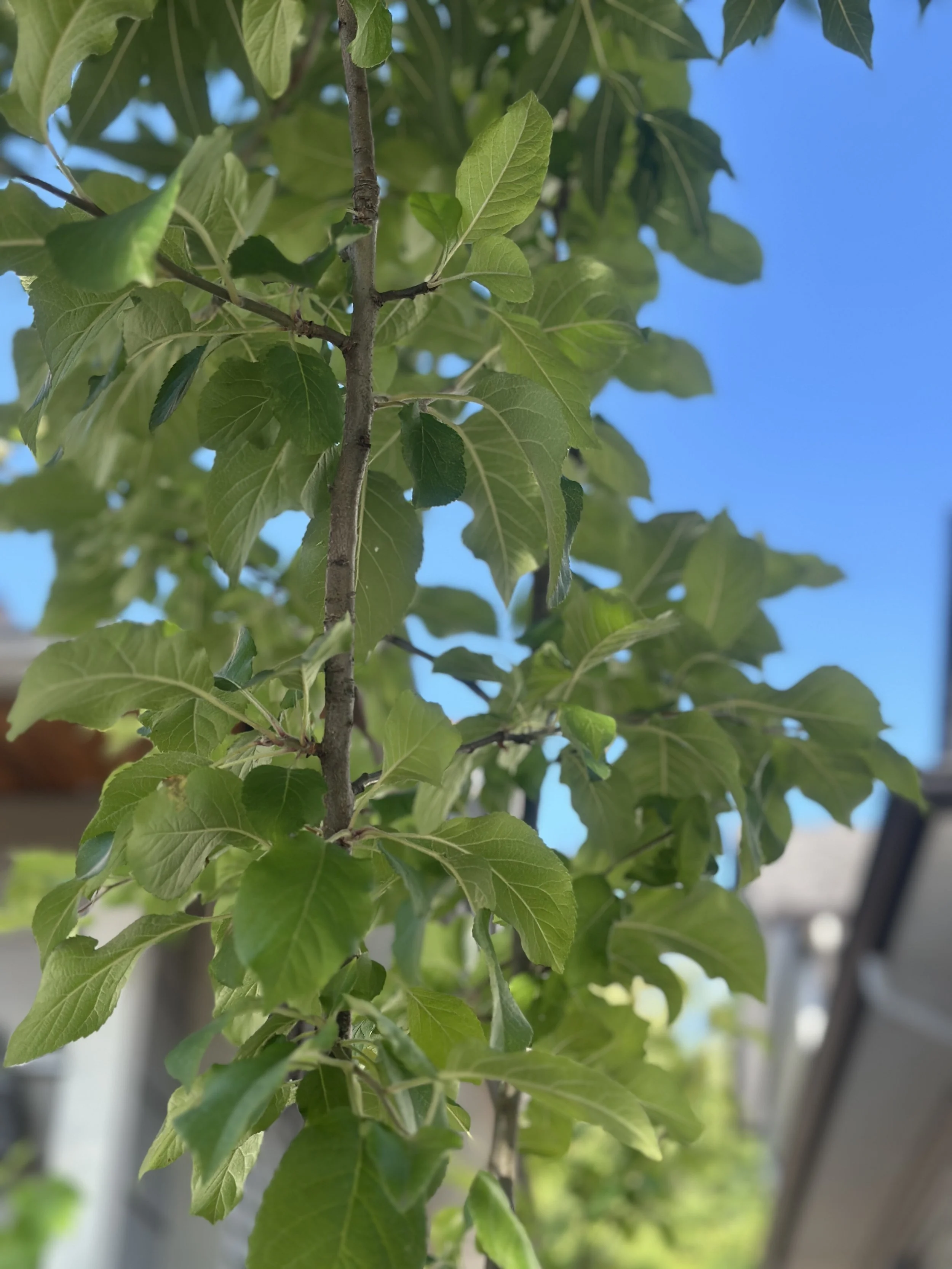
At first, I was disappointed. Then I started looking up possible reasons and learned something I had not known before.
When a young fruit tree produces too much too soon, it may skip the next year. It may need time to rest, recover, and store energy again.
Farmers often thin flowers or fruit to prevent this from happening. Not because fruit is bad, but because the tree cannot always support every possible fruit and still remain strong.
I had no idea.
Last year, every flower became an apple.
We were delighted by the abundance. The tree may have been carrying more than it was ready to carry.
That made me think about piano practice.
It is easy to think that growth should always look like more.
More hours.
More pieces.
More repetitions.
More difficulty.
More results.
And of course, music does require effort. Growth does not happen by doing nothing. A musician needs patience, discipline, courage, and a willingness to return to hard things again and again.
But even good things can turn against growth when they go beyond what the system can carry.
Fruit is good.
But too much fruit can exhaust a young tree.
Practice is good.
But too much practice without method, direction, body awareness, or recovery can become strain.
This is where I think practicing becomes more complicated than people often imagine.
More time is not always better learning.
More repetition is not always deeper understanding.
More difficulty is not always real progress.
If the method is unclear, more practice can create more confusion.
If the body is tense, more effort can create more tension.
If the sound has no direction, more repetition can make the music heavier without making it clearer.
In Chinese, there is a phrase: 物極必反.
When something reaches an extreme, it can begin to turn into its opposite.
I think about that often in piano practice.
A student may be working hard, but if the work has no direction, the effort can slowly become discouragement.
A pianist may repeat a passage many times, but if the body is tightening each time, the repetition may be training tension instead of freedom.
A musician may keep adding more and more, but if nothing is being absorbed, “more” does not become growth.
That does not mean effort is wrong.
A tree is not wrong to bear fruit.
A pianist is not wrong to work hard.
The question is whether the roots and branches are strong enough to carry what is being asked of them.
Sometimes growth means adding more.
But sometimes growth means thinning.
Choosing what to keep.
Choosing what to simplify.
Choosing what not to force yet.
Choosing when to stop before the whole system becomes exhausted.
That is one of the ideas behind my piano-practice book.
Practicing is not simply about doing more.
It is about learning how to work in a way that actually grows something.
I still hope our apple tree flowers again next year.
But this year, I am trying to understand its silence differently.
Not as failure.
Maybe as a reminder.
Even abundance needs wisdom.
Even effort needs direction.
Even good things, when carried too far, can become too much.