Testing a Four-Hand Arrangement at the Piano
This week I made more progress on my new four-hand arrangement of Rachmaninoff’s Barcarolle.
After several passes through both parts at the piano, reading from the score on a laptop, I printed the new 30-page arrangement on paper!
Printing a score is usually one of the final stages in finishing an arrangement, but here are always many edits to make even after printing.
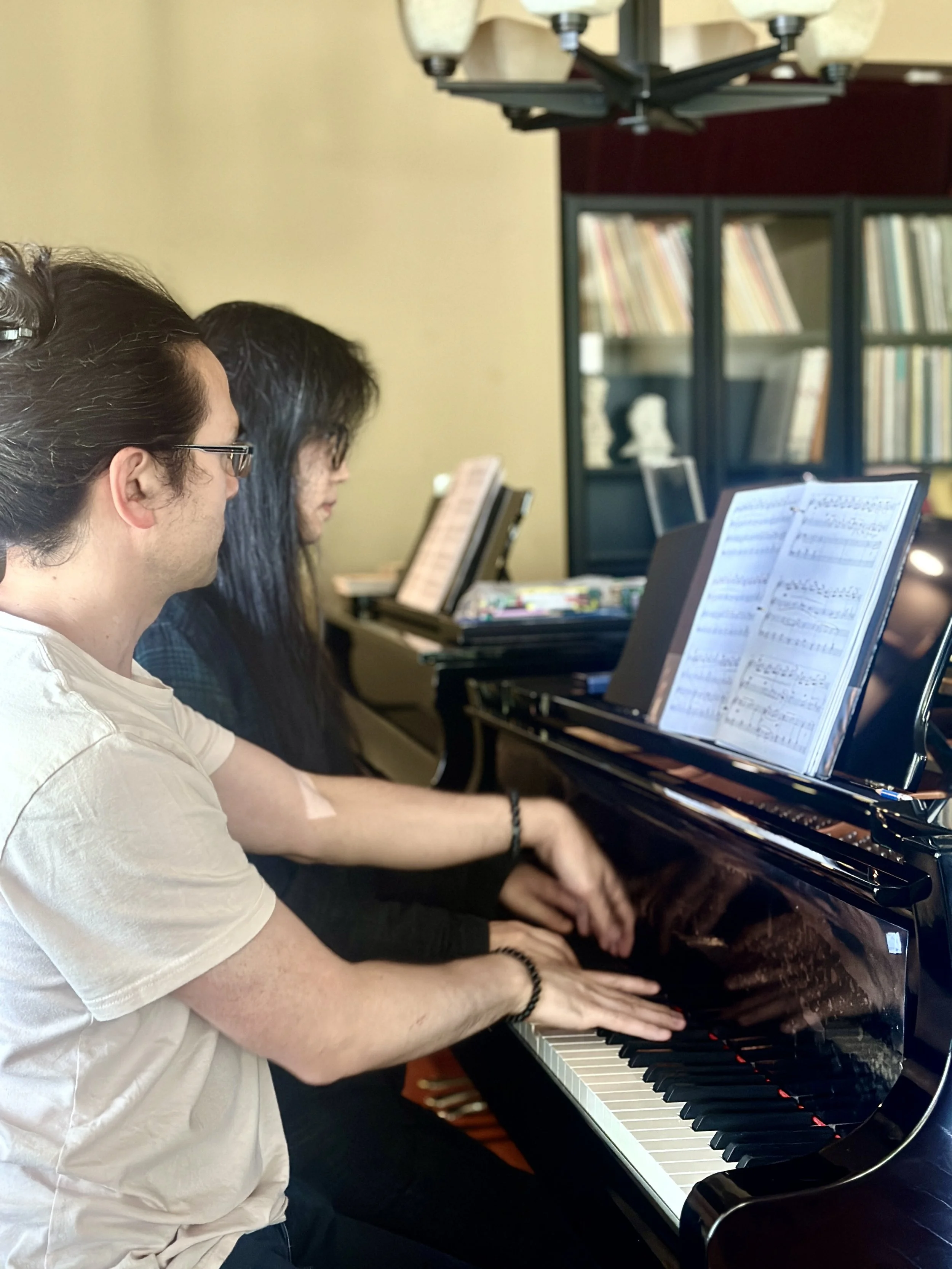
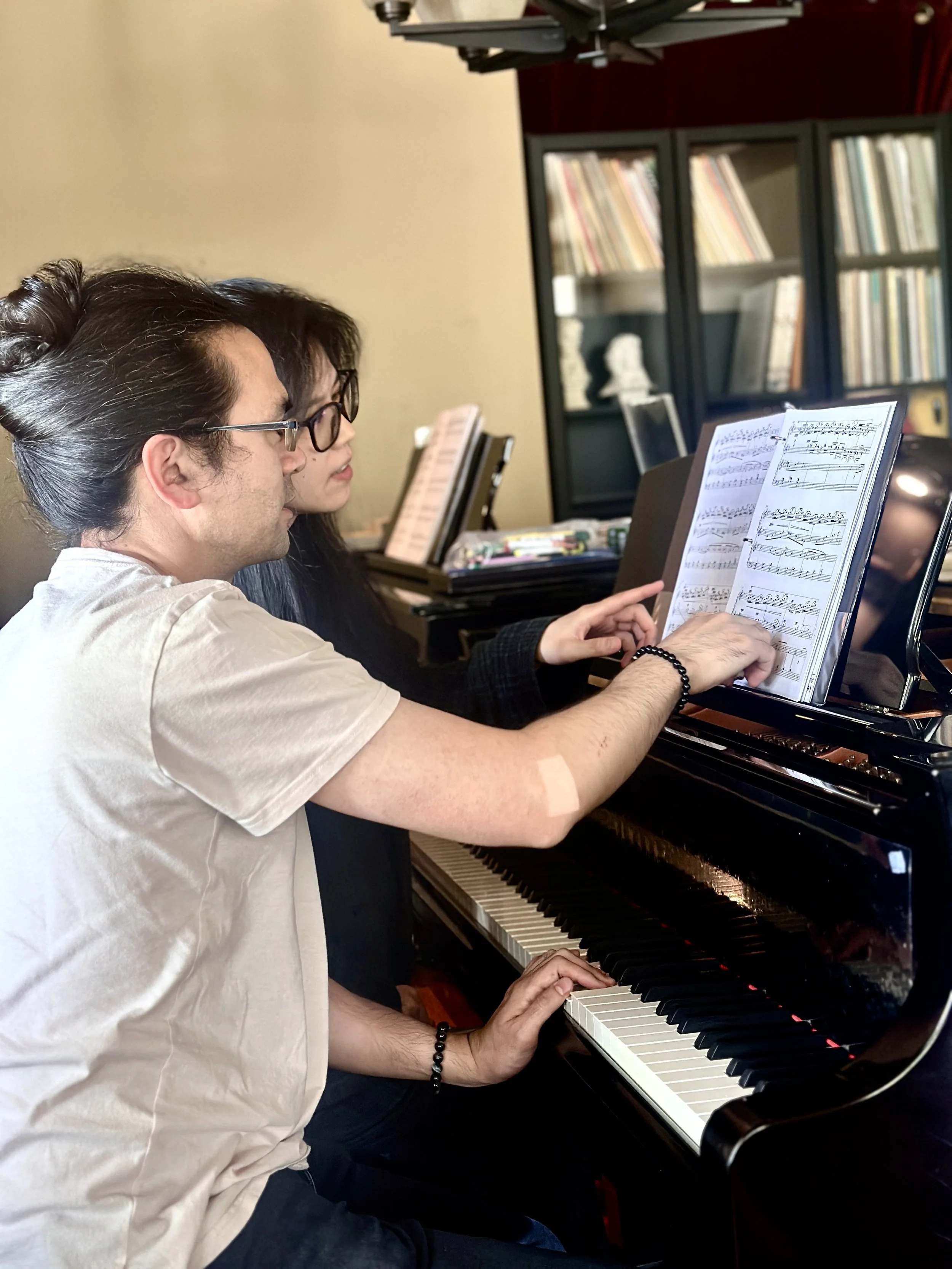
Clare and I sight-read through the arrangement together this week to see how the parts feel when we are actually sitting at the same piano.
Sometimes a note that looks simple on the page becomes a problem when one player needs to hold it while the other player also needs access to the same area of the keyboard.
I have also started Clare’s request to arrange Mussorgsky’s Pictures at an Exhibition for four hands.
Rather than using only Mussorgsky’s original piano solo version as the basis, I am working from Ravel’s orchestration. That gives me more voices, colours, and textures to work with when translating the music into a four-hand arrangement.
It is a large piece and will take time, but it is an exciting project to begin.
More updates soon!